
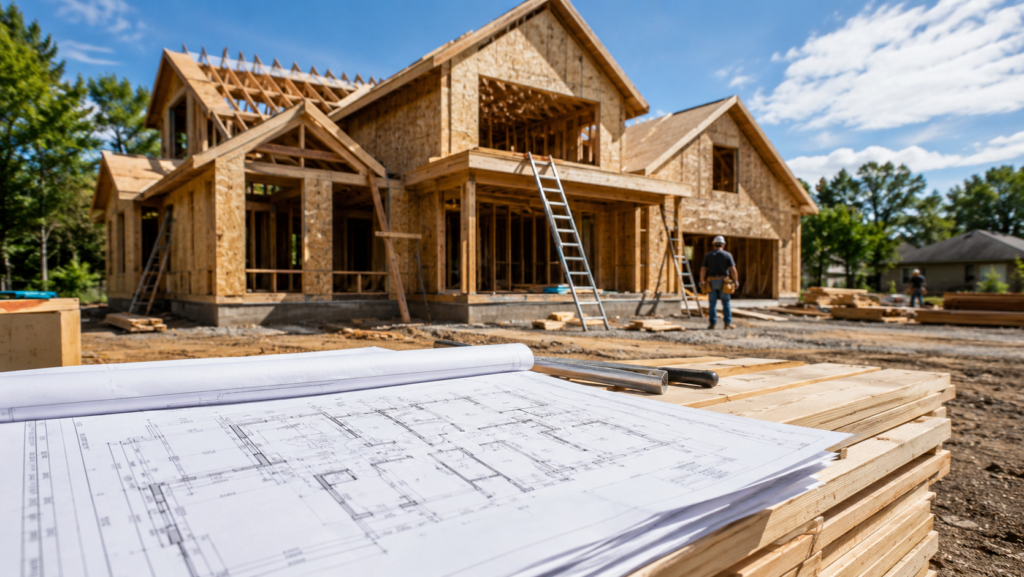
Florida now requires builders to provide a one-year warranty for certain defects in qualifying newly constructed homes. The Florida new home builder warranty law gives purchasers an additional statutory basis for holding a builder responsible when covered equipment, materials, or workmanship result in a material violation of the Florida Building Code.
However, the warranty does not cover every complaint about a new home. It contains specific definitions, exclusions, timing requirements, and enforcement limitations. A builder may also have its own written warranty, and the homeowner may still need to comply with contractual notice provisions, Chapter 558, mediation, or arbitration requirements.
The Law Offices of Adam G. Hill represents Florida homeowners and property owners in home-builder disputes, construction-defect claims, warranty disputes, Chapter 558 matters, demand letters, mediation, arbitration, and litigation.
If your newly constructed home has serious defects and the builder is refusing to provide an adequate remedy, call 833-918-1877 or complete our online case evaluation form.
What Is Florida’s One-Year New Home Builder Warranty?
Section 553.837, Florida Statutes, establishes a mandatory builder warranty for qualifying newly constructed homes.
The statute became effective July 1, 2025.
Under the law, a builder must provide a one-year warranty covering certain construction defects involving equipment, materials, or workmanship furnished by:
- The builder
- The builder’s subcontractors
- The builder’s suppliers
To fall within the statutory warranty, the defect must result in a material violation of the Florida Building Code.
The statute does not make the builder responsible for every scratch, cosmetic disagreement, maintenance issue, appliance problem, or condition caused by someone outside the builder’s control.
What Homes Are Covered?
The statute applies to qualifying “newly constructed homes.”
The statutory definition generally includes certain residential properties that have not previously been occupied, including:
- Single-family homes
- Duplexes
- Triplexes
- Quadruplexes
- Certain qualifying modular, manufactured, or factory-built residential structures
The law does not necessarily apply to every residence, condominium unit, renovation, addition, resale home, commercial property, or previously occupied property.
Whether a home falls within the statutory definition should be evaluated based on:
- The type of property
- Whether it had previously been occupied
- The date of title conveyance
- The date of initial occupancy
- The identity of the builder
- The construction agreement
- The warranty documents
- The nature of the claimed defect
- When the relevant events occurred
Do not assume that a home is covered merely because it appears new.
When Does the One-Year Warranty Period Begin?
The one-year statutory period begins after the earlier of:
- The original conveyance of title to the initial owner; or
- Initial occupancy of the home
This means the warranty period may begin before the date a homeowner assumes it started.
For example, the relevant date may not be:
- The day the defect was discovered
- The day the builder first inspected it
- The day the homeowner submitted a warranty request
- The day the builder attempted a repair
- The date of the last repair attempt
Homeowners should preserve documents showing:
- The date title was conveyed
- The closing date
- The date of occupancy
- The certificate of occupancy
- The date possession was delivered
- The date the defect was first observed
- The date the builder was notified
- The date of each inspection or repair attempt
Do not assume that ongoing discussions or repeated repairs automatically extend the statutory warranty period or other legal deadlines.
What Defects Does the Warranty Cover?
The statutory warranty covers qualifying defects involving equipment, materials, or workmanship furnished by the builder or its subcontractors or suppliers when the defect results in a material violation of the Florida Building Code.
Depending on the facts, potentially relevant defects may involve:
- Roof installation
- Flashing
- Water intrusion
- Windows and doors
- Exterior waterproofing
- Stucco
- Structural framing
- Foundations
- Drainage and grading
- Plumbing
- Electrical systems
- HVAC systems
- Insulation
- Exterior cladding
- Load-bearing components
- Other building systems
This does not mean every problem in those categories is automatically covered.
The homeowner still may need to establish:
- A defect exists
- The builder, subcontractor, or supplier furnished the defective work or material
- The condition constitutes a material Florida Building Code violation
- The condition arose during the applicable warranty period
- The condition is not excluded
- Proper notice was provided
- The claimed damages were caused by the defect
A permit, inspection, or certificate of occupancy does not necessarily resolve whether the builder complied with the contract, warranty, plans, or applicable legal duties.
For broader assistance with new-home defects, see our Florida Home Builder Dispute Attorney page.
What Is a Material Violation of the Florida Building Code?
Not every technical disagreement or code issue is necessarily a material violation.
Florida law generally defines a material violation as a Florida Building Code violation that exists within a completed building and may reasonably result, or has resulted, in physical harm to a person or significant damage to the performance of the building or its systems.
The materiality analysis may require:
- Inspection
- Engineering analysis
- Building-code review
- Photographs
- Testing
- Repair history
- Evidence of water or structural damage
- Evidence concerning the building system’s performance
- Expert opinion
A homeowner should not assume that a cosmetic imperfection automatically establishes a material violation.
A builder should also not assume that a condition is harmless merely because it passed an earlier inspection.
What Is Not Covered by the Statutory Warranty?
Section 553.837 contains important exclusions.
The statutory warranty generally does not require the builder to cover:
- Normal wear and tear
- Normal house settling within generally accepted trade practices
- Defects caused by construction, modification, or repairs performed by a purchaser, later purchaser, or someone acting for that purchaser rather than the builder
- Loss or damage caused by the purchaser
- Loss or damage caused by a later owner
- Loss or damage caused by a third party
- Loss or damage caused by an act of God outside the builder’s control
- Appliances or equipment covered by a manufacturer’s warranty
Disputes may arise over whether an exclusion actually applies.
For example, a builder may argue that:
- Cracking is normal settlement
- Water damage resulted from homeowner maintenance
- A later contractor caused the problem
- Landscaping or drainage changes caused the condition
- An appliance is covered only by the manufacturer
- Storm damage caused the problem
- The defect is cosmetic rather than material
The homeowner may need evidence separating the original construction defect from later damage, maintenance issues, repairs, weather events, or third-party work.
What Must the Builder Do for a Covered Defect?
For a defect covered by the statutory warranty, the builder must remedy the defect at the builder’s expense.
The builder must also restore work damaged while fulfilling the warranty obligation.
That does not necessarily mean the homeowner controls every detail of the repair.
Disputes may arise over:
- Whether the condition is covered
- What caused the condition
- Whether repair or replacement is appropriate
- The proposed repair method
- Who will perform the work
- Whether permits are required
- Whether destructive testing is necessary
- Whether the builder must restore finishes
- Whether the proposed repair addresses the cause
- Whether prior repairs failed
- Whether the homeowner must temporarily vacate
- What warranty applies to the repair
- How quickly the work must be completed
Before allowing substantial repair work, the homeowner should obtain the proposed scope in writing and document the existing condition.
Does the Warranty Transfer to a New Owner?
Yes, the required statutory warranty continues during the full one-year period even if the home is sold or transferred.
A later purchaser within that initial statutory period may therefore have rights under the warranty, depending on the facts and timing.
The transfer does not restart the one-year period.
A later owner should determine:
- When title was originally conveyed
- When the home was first occupied
- How much of the original period remains
- Whether the defect was previously reported
- Whether repairs were attempted
- Whether the builder has an express written warranty
- Whether any claim procedures apply
The statute’s transfer requirement can be important when a newly constructed home is resold soon after completion.
What If the Builder Provided Its Own Written Warranty?
Many builders provide an express written warranty containing their own:
- Coverage provisions
- Exclusions
- Claim procedures
- Inspection rights
- Repair standards
- Deadlines
- Mediation requirements
- Arbitration provisions
- Limitations
- Transfer provisions
An express written warranty may supersede the statutory warranty provisions if it satisfies the statutory requirements, including equivalent or greater scope, coverage, duration, and transferability during the required period.
Do not assume that every builder warranty automatically overrides the statute.
The written warranty should be reviewed to determine:
- Whether coverage is equal to or greater than the statutory warranty
- Whether it lasts for the full required period
- Whether it transfers properly
- Whether it contains additional coverage
- Whether its procedures were followed
- Whether exclusions are being applied correctly
- Whether it requires mediation or arbitration
- Whether it attempts to limit damages or remedies
The builder’s denial letter or warranty-portal response is not necessarily the final legal determination.
What If the Builder Refuses to Fix the Defect?
If the builder refuses coverage, denies responsibility, ignores the warranty claim, or offers an inadequate repair, preserve the entire record.
Gather:
- Purchase or construction agreement
- Builder warranty
- Addenda
- Plans and specifications
- Closing documents
- Certificate of occupancy
- Warranty submissions
- Builder portal messages
- Emails
- Text messages
- Photographs
- Videos
- Inspection reports
- Engineering reports
- Repair estimates
- Work orders
- Prior repair records
- Evidence of consequential damage
- Timeline of complaints and responses
Ask the builder to state its position in writing.
The builder’s written response may identify whether it is claiming:
- The defect is excluded
- The problem is cosmetic
- The problem is normal settlement
- The homeowner caused the condition
- A third party caused the damage
- The claim was untimely
- The builder already completed an adequate repair
- The issue falls under a manufacturer’s warranty
- The condition is not a material code violation
Do not make accusations or admissions in emotional emails. The objective is to create a clear factual record.
For representation in these matters, see our Florida Home Builder Dispute Attorney page.
Should You Get an Independent Inspection?
An independent inspection may be valuable when:
- The builder denies that a defect exists
- Multiple repair attempts failed
- Water intrusion continues
- Cracking or movement appears significant
- The builder proposes a limited cosmetic repair
- The cause of the damage is disputed
- The repair scope is disputed
- The homeowner is considering litigation
- Important evidence may be destroyed during repairs
Depending on the issue, the appropriate professional may include:
- Licensed home inspector
- Engineer
- Architect
- Roofing consultant
- Building-envelope professional
- Licensed contractor
- Plumber
- Electrician
- HVAC professional
- Other qualified expert
An inspection should identify more than the visible symptom when possible.
The report may need to address:
- The condition
- Probable cause
- Relevant plans or code provisions
- Necessary testing
- Recommended repair
- Resulting damage
- Estimated repair scope
The homeowner should preserve original photographs, videos, reports, invoices, and electronic files.
Should You Let the Builder Inspect or Attempt Repairs?
A homeowner should not automatically deny the builder access.
Inspection or repair rights may arise under:
- Section 553.837
- Chapter 558
- The purchase agreement
- The construction agreement
- The builder’s written warranty
- Another applicable legal requirement
Before the inspection or repair:
- Photograph and video the condition
- Preserve prior reports
- Request the proposed scope in writing
- Identify who will enter the home
- Determine whether destructive testing is proposed
- Determine who will restore opened areas
- Determine whether permits are required
- Consider whether an independent expert should attend
- Avoid signing an unnecessary release
- Document the inspection
- Document the repair work
- Preserve removed materials when reasonably practical
Allowing access does not necessarily mean accepting the builder’s position or waiving a claim.
However, unreasonably denying an inspection or repair opportunity may affect the dispute, depending on the contract, warranty, Chapter 558, and facts.
How Does Chapter 558 Affect the Warranty Claim?
Florida Chapter 558 may impose a separate presuit process for qualifying construction-defect claims.
The process may involve:
- Written notice describing the defects
- Supporting photographs or reports
- An opportunity to inspect
- Requests for project documents
- Testing
- A builder response
- An offer to repair
- An offer to pay
- A combined repair and payment offer
- A denial
- Later mediation, arbitration, or litigation
The one-year statutory warranty does not automatically replace Chapter 558.
A homeowner may need to address:
- The statutory builder-warranty claim
- The builder’s written warranty procedures
- Chapter 558
- Contractual mediation or arbitration
- Other applicable construction or contract claims
The correct sequence matters.
Do not file a lawsuit solely because the builder denied a warranty request without first reviewing whether Chapter 558 or another presuit requirement applies.
Does the Warranty Give You the Right to Sue?
Section 553.837 provides that enforcement is limited to a private civil cause of action by a purchaser against a builder that fails to comply with the statute.
That does not mean every warranty disagreement should immediately become a lawsuit.
Before litigation, evaluate:
- Whether the home qualifies
- Whether the defect is covered
- Whether the condition is material
- Whether the builder furnished the defective work or material
- Whether an exclusion applies
- Whether the claim was submitted within the warranty period
- Whether Chapter 558 applies
- Whether the contract requires mediation or arbitration
- Whether damages can be proven
- Whether attorney’s fees may be recoverable
- Whether the builder offered a reasonable repair
- Whether litigation is financially justified
The construction contract may require arbitration rather than an ordinary court lawsuit.
The homeowner may also have related contractual or construction claims, depending on the facts.
What Evidence Will You Need?
A builder-warranty dispute is evidence-driven.
Important evidence may include:
- Purchase agreement
- Construction contract
- Written builder warranty
- Plans
- Specifications
- Addenda
- Selection sheets
- Upgrade documents
- Change orders
- Certificate of occupancy
- Closing documents
- Title records
- Evidence of initial occupancy
- Warranty claims
- Builder responses
- Inspection reports
- Engineering reports
- Photographs
- Videos
- Emails
- Text messages
- Builder portal communications
- Work orders
- Repair records
- Repair estimates
- Invoices
- Evidence of resulting damage
- Evidence of temporary mitigation
- A detailed timeline
Do not:
- Delete messages
- Alter photographs
- Crop out important context
- Recreate records
- Backdate warranty submissions
- Throw away damaged materials without documentation
- Allow permanent repairs to destroy important evidence without first documenting the condition
For additional guidance, see our article: What Evidence Do You Need for a Florida Contract Dispute?
What Damages May Be Involved?
The proper remedy depends on the claim, defect, contract, warranty, evidence, and applicable law.
Potential issues may include:
- Reasonable repair cost
- Cost to complete unfinished work
- Damage caused by the covered defect
- Cost of necessary inspections
- Engineering expenses
- Emergency mitigation
- Temporary housing
- Loss of use
- Diminution in value
- Interest
- Attorney’s fees when legally authorized
- Other documented damages
The existence of a defect does not automatically establish every amount demanded.
Damage disputes often involve whether:
- The proposed repair is necessary
- The repair addresses the actual cause
- The estimate includes upgrades
- The estimate includes betterment
- Multiple estimates contain duplicate work
- Another party caused part of the damage
- The homeowner reasonably mitigated additional loss
- The claimed expenses are documented
Detailed repair scopes and expert opinions are generally more useful than an unsupported lump-sum demand.
Are Attorney’s Fees Recoverable?
Attorney’s fees are not automatically recoverable in every builder-warranty dispute.
Fee recovery may depend on:
- The purchase agreement
- The construction agreement
- The written warranty
- An applicable statute
- A settlement agreement
- Arbitration rules
- A qualifying proposal for settlement
- Another recognized legal basis
Builder contracts frequently contain prevailing-party attorney’s fee provisions.
Those provisions may create substantial financial risk for both sides.
For more information, see our article: Can You Recover Attorney’s Fees in a Florida Breach of Contract Case?
Do Repair Attempts Extend the Deadline?
Do not assume so.
A builder may inspect or attempt repairs for months while the homeowner assumes all legal deadlines have stopped.
The statutory warranty expressly does not extend the applicable statute of repose.
Other legal, contractual, warranty, arbitration, and Chapter 558 deadlines may continue to apply.
Preserve:
- The date the defect was discovered
- The date it was reported
- Every repair date
- Every inspection date
- The builder’s written responses
- Any promises concerning future repairs
- Any written extensions or tolling agreements
Repeated repair attempts may be relevant evidence, but they do not necessarily extend every deadline.
Prompt legal review is particularly important when the builder continues attempting repairs as the one-year warranty period approaches expiration.
Can a Demand Letter Help?
A targeted attorney demand letter may help when the builder:
- Ignores the warranty claim
- Denies coverage without adequate explanation
- Refuses to inspect
- Performs repeated unsuccessful repairs
- Offers only a cosmetic repair
- Refuses to provide a written repair plan
- Stops communicating
- Rejects responsibility for resulting damage
A builder-warranty demand letter may:
- Identify the contract and warranty
- Cite the statutory warranty
- Describe the defects
- Summarize notice and repair history
- Request an inspection
- Demand a written repair protocol
- Request reimbursement
- Request project or warranty records
- Establish a response deadline
- Preserve legal rights
- Propose mediation or settlement
- Prepare the matter for Chapter 558, arbitration, or litigation
For eligible and reasonably defined presuit matters, the Law Offices of Adam G. Hill offers a $1,500 flat-fee attorney demand-letter service.
The eligible service generally includes:
- Review of the core documents reasonably necessary to prepare the letter
- Preparation of the attorney demand letter
- Sending the letter by certified mail with return receipt requested
- Up to one hour of follow-up communication or negotiation after sending
The $1,500 service is not full litigation representation.
A formal Chapter 558 notice, expert-intensive defect claim, emergency issue, extensive project record, arbitration, or lawsuit may require a different scope and written fee agreement.
For more information, see our Florida Demand Letter Attorney page.
What Should You Do If Your Builder Refuses Coverage?
Take these steps:
- Save the written warranty and construction agreement.
- Identify the date of title conveyance and initial occupancy.
- Submit the defect in writing through the builder’s required process.
- Preserve screenshots or confirmation of the submission.
- Photograph and video the condition.
- Preserve builder communications and work orders.
- Obtain an independent inspection when appropriate.
- Request the builder’s denial or repair position in writing.
- Do not permanently repair the disputed condition without documenting it.
- Take reasonable emergency steps to prevent additional damage.
- Determine whether Chapter 558 applies.
- Review mediation or arbitration requirements.
- Do not assume repair discussions extend legal deadlines.
- Consult a Florida home builder dispute attorney promptly.
If the dispute is serious, repeated informal requests are usually not enough. The homeowner needs a documented strategy based on the warranty, statute, contract, evidence, repair scope, and deadlines.
If your builder has denied a serious new-home defect claim, call 833-918-1877 or complete our online case evaluation form.
Frequently Asked Questions About Florida’s New Home Builder Warranty
Does Florida require builders to provide a new-home warranty?
Florida section 553.837 requires a one-year warranty for qualifying newly constructed homes and covered defects. Whether the statute applies to a particular property or transaction should be evaluated individually.
When did Florida’s mandatory builder warranty take effect?
The law became effective July 1, 2025.
How long does the warranty last?
The statutory warranty lasts one year after the original conveyance of title to the initial owner or initial occupancy, whichever occurs first.
Does the warranty begin when I discover the defect?
Not necessarily. The statutory period is tied to title conveyance or initial occupancy, not the date the homeowner discovers the problem.
What homes qualify?
The statute generally covers certain newly constructed, previously unoccupied single-family homes, duplexes, triplexes, quadruplexes, and qualifying residential structures identified in the statute.
Does the warranty cover every defect?
No. The defect must fall within the statute, involve qualifying equipment, material, or workmanship, and result in a material Florida Building Code violation. Exclusions also apply.
Does it cover cosmetic defects?
Not automatically. A cosmetic issue may not constitute a material Florida Building Code violation.
Does it cover normal settlement?
Normal house settling within generally accepted trade practices is excluded.
Does it cover appliances?
Appliances or equipment covered under a manufacturer’s warranty generally fall outside this statutory builder-warranty provision.
Does the warranty transfer if I sell the home?
The required warranty continues during the full initial one-year period even if the home is sold or transferred. The transfer does not restart the one-year period.
Can the builder use its own written warranty?
Yes, but an express written warranty supersedes the statutory provisions only if it satisfies the statutory requirements concerning scope, coverage, duration, and transferability.
Must the builder pay for covered repairs?
The statute requires the builder to remedy covered defects at the builder’s expense and restore work damaged while completing the remedy.
Do I have to let the builder inspect?
The builder may have inspection rights under the statute, Chapter 558, the contract, or the written warranty. Access should be documented and handled carefully.
Do I have to accept the builder’s proposed repair?
Not automatically in every case. The proposed scope, cause, prior repairs, contract, warranty, Chapter 558, and facts should be evaluated before accepting or rejecting a repair.
Does Chapter 558 still apply?
It may. The statutory builder warranty does not automatically eliminate Chapter 558 or contractual presuit procedures.
Can I sue the builder?
The statute provides a private civil cause of action by a purchaser against a builder that fails to comply. Contractual arbitration, Chapter 558, notice, evidence, and other requirements may affect how the claim proceeds.
Can I recover attorney’s fees?
Possibly, but attorney’s fees are not automatic. Recovery may depend on the contract, warranty, statute, arbitration agreement, settlement terms, or another legal basis.
Do repair attempts extend the one-year period?
Do not assume they do. Repair efforts may be relevant evidence, but they do not necessarily extend the statutory period or other legal deadlines.
What should I do if the builder denies my claim?
Preserve the denial, contract, warranty, photographs, reports, communications, and repair records. Determine whether Chapter 558 or arbitration applies and obtain legal advice promptly.
Contact a Florida Home Builder Dispute Attorney
Florida’s one-year statutory warranty may provide important rights when a qualifying newly constructed home contains covered defects. But the warranty is only one part of the analysis.
The contract, written warranty, Chapter 558, arbitration provisions, evidence, repair history, damages, and legal deadlines must all be evaluated together.
If your builder denied your warranty claim, failed to correct serious defects, performed repeated unsuccessful repairs, or refuses to provide an adequate solution, the Law Offices of Adam G. Hill may be able to help.
Call 833-918-1877 or complete our online case evaluation form to request a free case evaluation.
The firm represents appropriate clients throughout Florida, with offices serving Tampa, Orlando, and Fort Myers.
This article is for general informational purposes only and does not create an attorney-client relationship. Every builder-warranty and construction-defect matter depends on the property, builder, contract, warranty, dates, defect, evidence, notices, exclusions, dispute-resolution requirements, damages, and applicable law.